


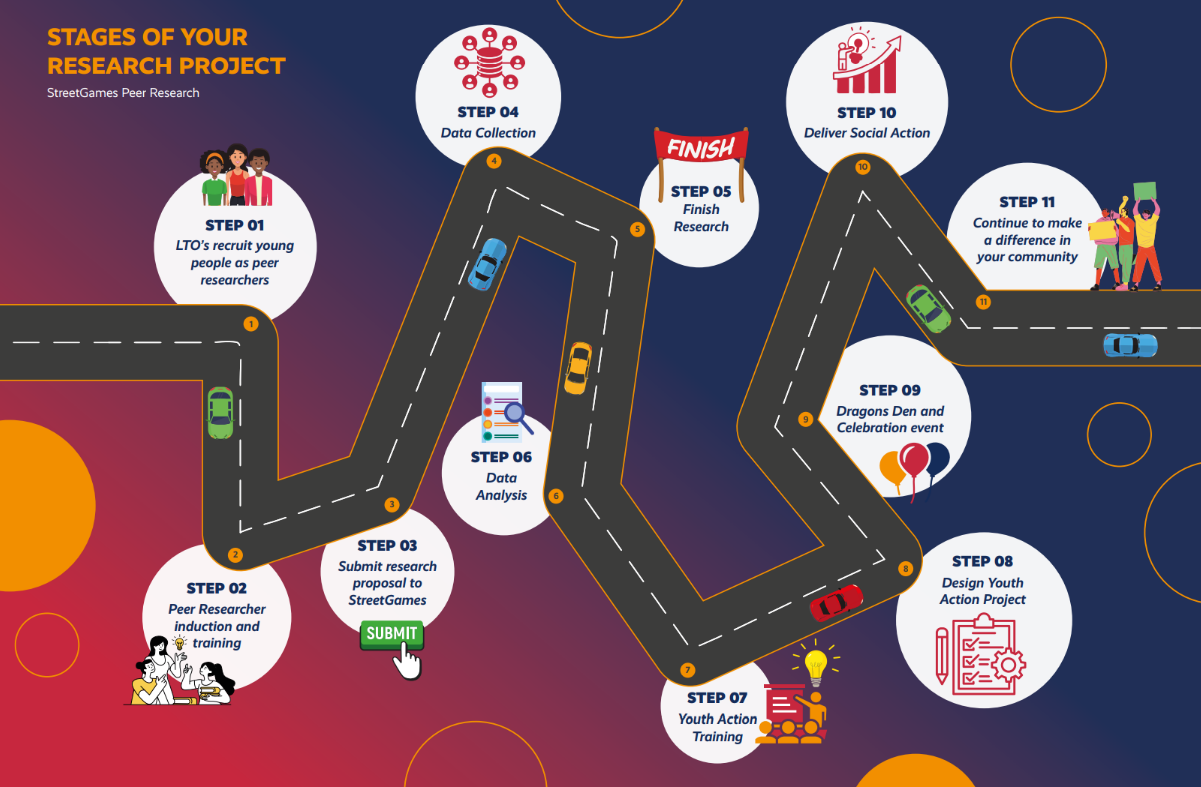
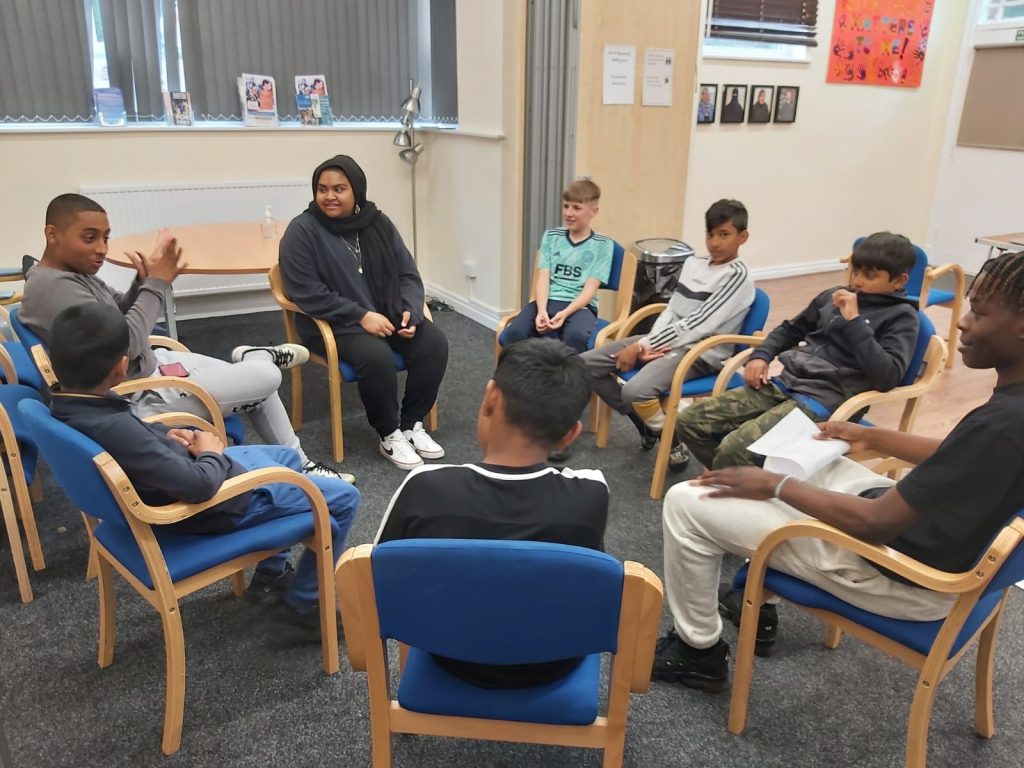
At StreetGames, young people living in low-income, under-served neighbourhoods are at the heart of all our work. When we do Peer Research, they are involved in all phases of the research: from designing and defining, developing research tools, collecting and analysing data, and writing up and disseminating findings.
Why Peer Research?
The voices of young people are extremely important. With insight gathered from young people, engaging sessions can be developed that meets the needs of the individuals, ensuring that they remain active. Evidence shows that having the right Doorstep Sport offer can and does increase attendance, support personal development and improve physical and mental health. Having young people’s voices heard allows for Doorstep Sport activation to be successful and meet the needs of all young people in the community.
Peer Research is a mutually empowering process that amplifies the voices of those furthest from power, equips participants with both specific and transferable skills, unifies communities, and catalyses change through the power of shared experience.
Peer Research can also enhance the research in a number of ways:
- Gathering better data: mutual solidarity creates a safe and supportive space to gather rich, authentic, nuanced data that goes beyond what would typically be shared in a traditional research interview.
- Access to ‘less heard’ voices: peer researchers can often connect with people who might be unwilling to engage with professional researchers. In addition, peer researchers can use their networks and relationships to involve people that may not otherwise have been included.
- The added value of lived experience: Peer researchers have their own lived experiences, and that knowledge and inside understanding of the issues being studied can enhance the research.
- Better dissemination of the research: co-producing and publishing accessible peer research means that more people can engage with reliable data about the experiences of young people and feel connected to the issues that affect them and the solutions they need.
- Meaningful Youth Action: Both peer researchers and research participants are motivated by a desire to create positive and meaningful change and are eager to be more involved in shaping the policies and decisions that affect their lives.
What does Peer Research at StreetGames involve?
Peer Researcher Recruitment: Peer researchers are recruited through community organisations in the StreetGames network. These organisations have the right staff to support and mentor the peer researchers on their journey.
Programme of Training: Co-designed with young people, this training is delivered locally in the young people’s communities to equip the peer researchers to design and deliver their research projects, and is supported by a bespoke handbook.
Local Mentoring: Peer researchers are mentored and guided by trusted adults from their community organisations. These staff are on hand to support and guide each individual to learn and develop throughout the project.
Research Phase: Peer-to-peer consultation in each community and data collection.
Data Analysis: The findings of the research are developed into a wider insight paper. Support is provided to the peer researchers to develop the consultation findings into area-based project proposals.
Youth Social Action: Young people plan and deliver a social action project in their local area. This involves completing StreetGames’ Youth Action workshop and the opportunity to present their proposed assignment both to their peers and local decision-makers in an inclusive, supportive and encouraging “Dragon’s Den” environment.
Celebration Event: Young leaders and their families have the opportunity to celebrate their projects, supported by StreetGames staff, inviting local partners.
Additional Local & National Volunteering Opportunities: Young people may participate in a young researchers’ pilot, sit on a funding decision panel along with senior professionals, take part in major event volunteering, and/or take on StreetGames Young Advisor roles.